The Home Innovation Team improves the shopping experience on Amazon focusing on furniture and home decor, building specific features or enhancing the commonly used platform.
My role
For the first ideation sprint I joined forces with my team mate Lisa. Once the work was approved, I was assigned to the EU Home team as their UX resource to develop part of the ideas.
Overview
We conducted an ideation exercise to provide a UX vision on innovative furniture shopping ideas, while integrating other existing but hard to find features. options from Amazon.
This work was shared with leadership, who integrated some of the ideas to be built in 2019 roadmap.
Ideation Sprint
In order to meet a tight deadline, we cleared our schedules and set to make a 5 day sprint. We focused in three main questions:
How to include all existing features in an organic way.
Bring to the customer a way of exploration and be a source of inspiration.
Provide a more interactive and hands-on product evaluation.
We began with desk research, benchmarking competitors and exploring ideas from unrelated sectors outside of e-commerce and furniture.
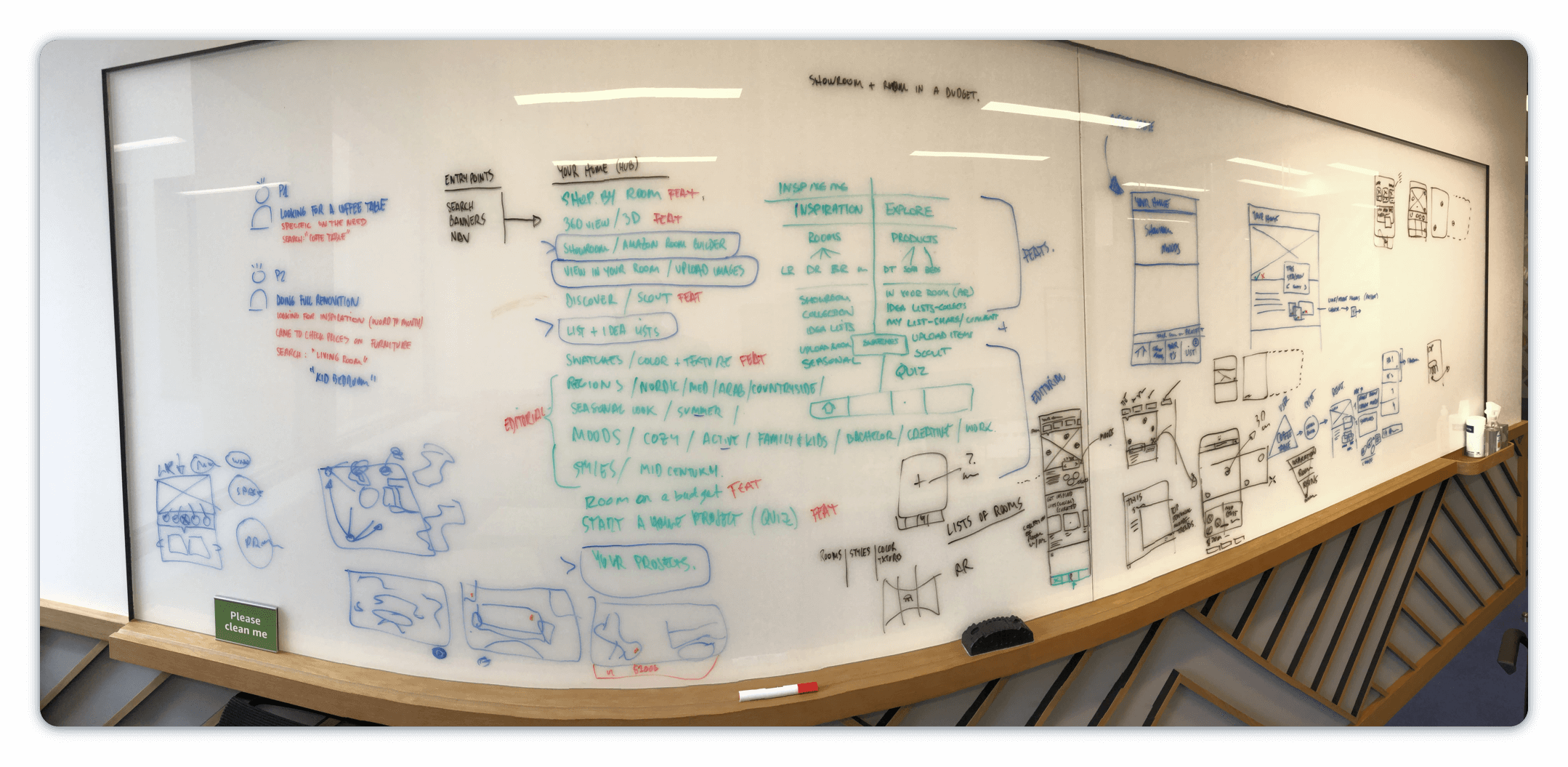
Workshop whiteboard
We developed the theme of shoppable content, enabling customers to discover both products and aesthetic styles. Research showed users struggle with style names like “Mid Century,” so we introduced features like Shopping by Budget for room curation within a set amount.
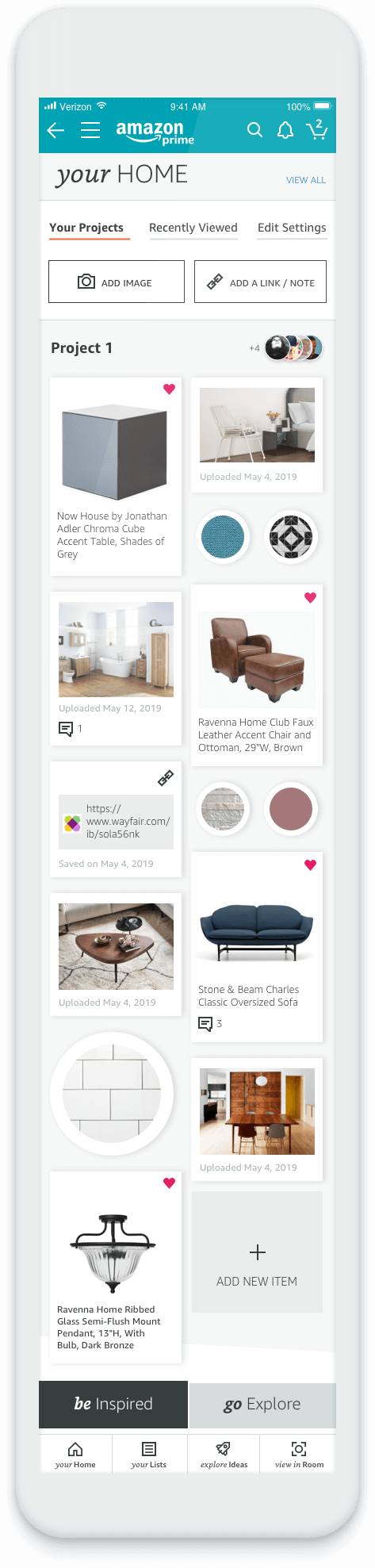
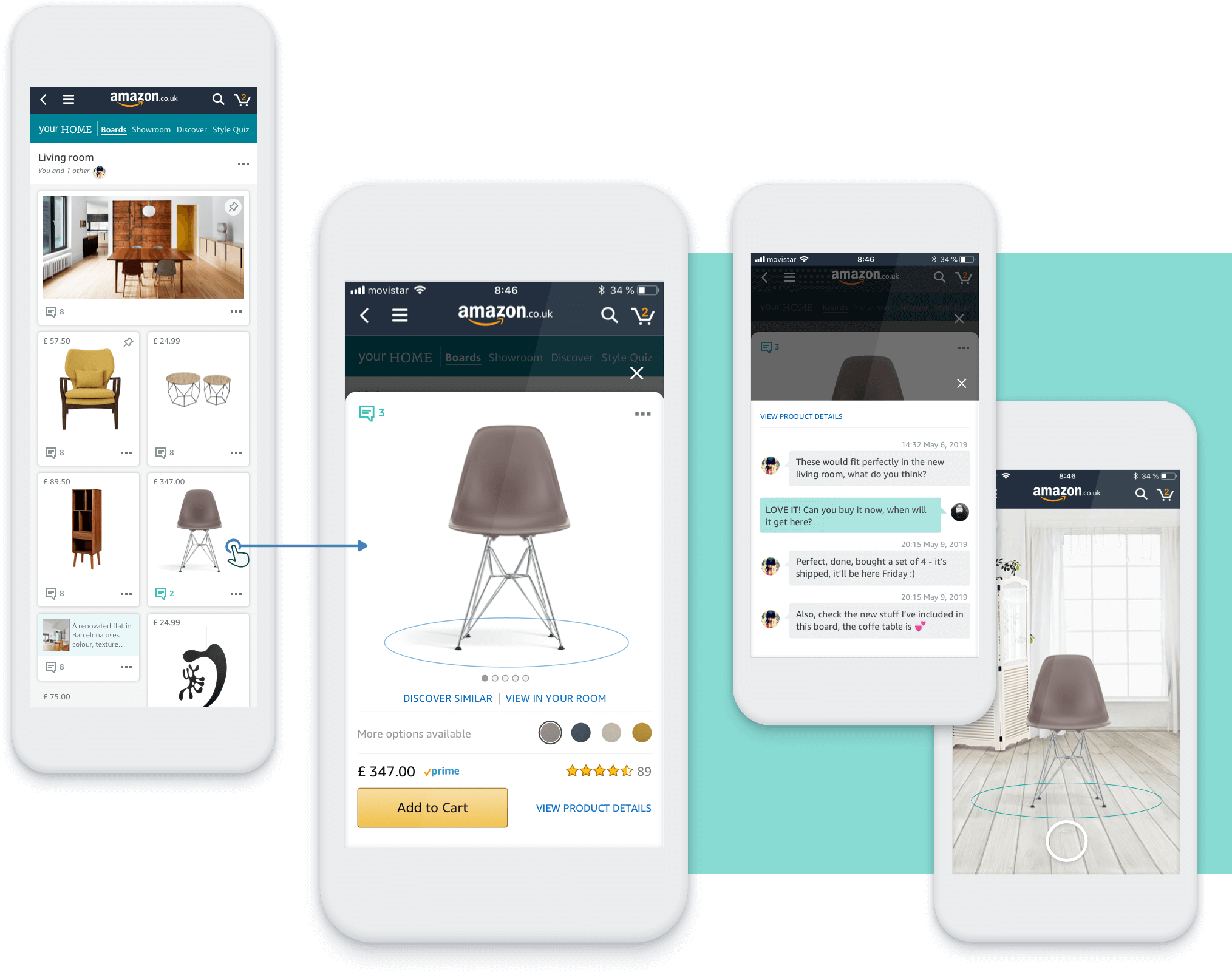
As our research revealed that furniture purchases take time, we added a scrapbooking feature, allowing users to create Boards that could compile products, personal photos, articles, and links, serving as a central hub for their furnishing projects.
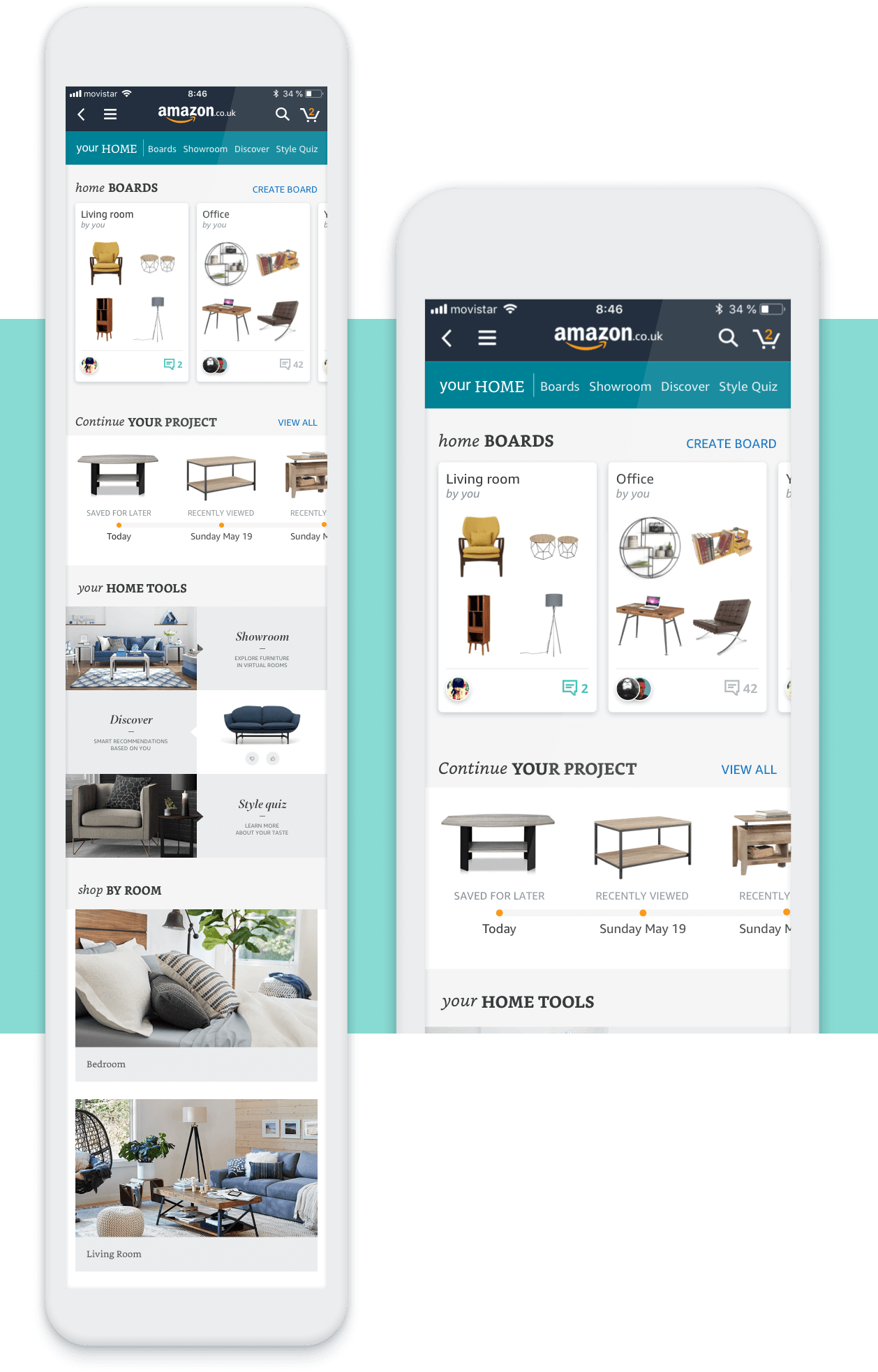
Homepage for the concept
Scrapbook board concept
During leadership reviews some concepts were broken down into more feasible features, which were prioritised Other ideas made it into the future vision documents and long-term roadmap.
The scrapbooking concept was highlighted into its own project, emphasizing the relevance of “home boards” as a central theme. I began working on this second iteration, as a cross-functional team of technical and product roles was created.
Process
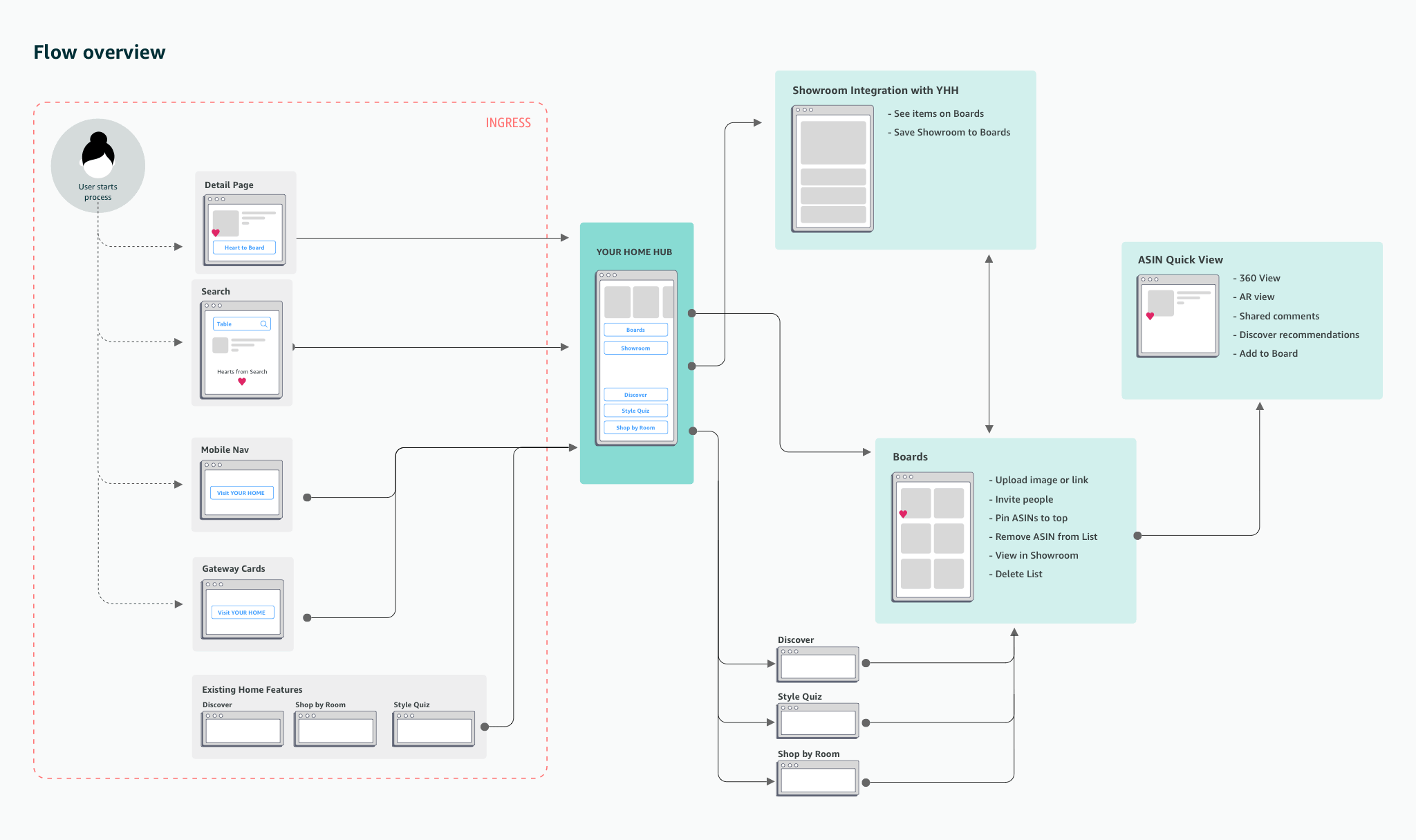
The project was divided into phases to create manageable user stories. I began by developing a customer flow that outlined functionalities for each level: landing page, board view, and product detail view.
Once the definition was clear, I was ready to proceed with the design work.
Boards, as the ultimate place to collect content were placed front and centre of the experience. Previously seen content was also displayed prominently to provide a starting point to include content on boards. All furniture shopping tools in a more easily discoverable way
At a product level, we provided options for product consideration like a quick view page and a chat feature to share products and ideas.
This was included as our research suggested people would discuss purchases beforehand with household members (partners, room mates, etc.).
Afterword
This project was meant to provide a vision CX that would inform of future potential features, so there were no success metrics involved.
As a designer, I successfully influenced the organization by driving key features and ideas from concept to implementation; many have already launched, with others actively progressing on our organization’s roadmaps.